free plans  home    gallery
 projects    philosophy    faq


built in wall clock
magnify
free plans: how to make a
Wall Clock
Basic Description Here is a free plan to create a clock built into the wall of your choice. Simple battery-operated clock movements are inexpensive and easy to acquire. It is a relatively short process and you can give any room a more regal look with this simple project. Note that these plans are for installing a clock in a wall made of wallboard or drywall (brick, stone, or thick plaster walls cannot accommodate the shaft lengths of standard clock movements).
Materials Clock movement and battery. If you would like to cover the access hole (recommended), you will also need flush-mount cabinet hinges and a small piece of plywood. A complete material list is provided below.
Tools Drill, proper-sized drill bit for shaft of clock movement, utility knife or jig saw, measuring tape. If you are planning on covering the access hole, see the complete tool list is provided below.
Cost The plan itself is free! Estimated cost of materials: $12
Time 1 hour
Difficulty Easy
Legal Notice Use of this website constitutes acceptance of our terms of service policy.


the project plan begins here


step 1


The first step involves acquiring the necessary materials and proper tools. It is best to get everything prepared before commencing because this allows you to progress without unnecessary interruptions.
wall clock

Material List

Item Qty. Description
#1 1 Battery operated clock movement. These are commonly available at craft stores and also via online merchants. Ensure that the shaft of the clock movement is long enough to reach through the thickness of your wall.
#2 1 Battery
#3 1 If you are going to cover the access to the clock movement (see plan for details) you will also need flush-mount cabinet hinges, a piece of wood large enough to cover the opening, and appropriate fasteners for the hinges.

Tool List

Tool
Drill and appropriately sized drill bit (see clock movement instructions for dimensioning).
Measuring tape
Utility knife or carbide cutter
If you are making an access panel, you will also need the necessary tools to prepare the access door: notably a saw and a router if you would like to provide a profile for the edges.


step 2


The first consideration is the location of the clock. We like to position them relatively high on a wall so that the delicate clock hands do not get damaged. For a built-in clock, you need to make sure that the wall behind the installation is free of wiring or water pipes. Also, you should ensure that there aren't any wall studs that will get in the way. Note that these instructions are for stud and wallboard (drywall) constructed walls - if your wall is brick or thick plaster, the shafts of ordinary clock movements will not be suitable.
begin by drilling a hole in the wall where you want to position the clock
You will be inserting the movement from the wall directly behind the desired location of the clock. Therefore, you will want to position the clock in a location so that the access will be from a insignificant location, ie. closet. We found a great place for the clock in by making an access opening from a kitchen pantry. Note that some jurisdictions require fire-rated walls between certain types of rooms (usually between garages and living spaces). We recommend not selecting this type of wall for built-in wall clock; penetrating this type of wall would require additional precautions and steps to maintain the required fire rating. If you are not sure, contact your local building department.

This is definitely a time when you want to follow the do-it-yourself adage: 'measure twice and cut (drill) once'. Make sure that the space directly behind your desired clock location is free from obstructions and will not be easily visible. Drill the appropriate sized hole for the shaft of the clock movement as shown on the right. If your drill is long enough, you can drill through the other side of the wall, otherwise, you can just measure.


step 3


If your drill bit wasn't long enough to penetrate through the other side of the wall, carefully measure the spot where it would have come through. Next, create a square for the access hole. We made a square about 4" x 4" (10 x 10cm) aligned to the clock movement. Then, drill four holes at the corners of the square. Notice the original mark in the center of the square. These holes will make it much easier to remove the drywall.
begin by drilling a hole in the wall where you want to position the clock


step 4


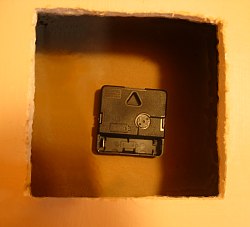
The final step before installing the clock movement is to cut out the square. You can use a utility knife and a straight edge and make repeated passes until you have penetrated through the drywall. Once you are through, the hole you drilled from the other side should be right in front of you. Finally, install the clock movement following the manufacturer's instructions, set the time, and insert a battery. Refer to the review section below for information regarding an access door.
cut an access hole with a utility knife and install the clock movement


review


Access Door


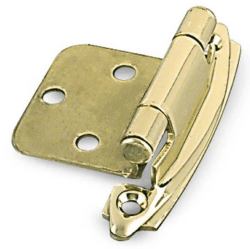
Now you have a great-looking built-in clock on your wall but you have an ugly hole on the other side of the wall. We highly recommend covering the hole with a door. The simplest way to achieve this is to use a pair of self-closing flush mount cabinet hinges like the one shown on the right. You can mount these self-closing hinges to one side of the hole. We used machine screws and nuts with large fender washers to fasten them to the drywall; if a wall stud is nearby, you can position the hinges right over the stud and use wood screws. A piece of hardwood or plywood (slightly larger than your hole, of course) can act as the door. You can use a router to provide an edge profile and paint or finish as desired. Finally, you can add a knob, but since this door is used so infrequently, we omitted a knob.

flush mount cabinet hinge

Design Considerations


  • location of clock: We recommend positioning the clock high on a wall to ensure that the delicate clock hands do not get damaged. Also, make sure that the access to the clock from the wall directly behind is free of obstructions and that the wall doesn't have electrical wiring or other interference. Remember, as stated in step 2, avoid installing a built-in wall clock in walls that have special fire requirements (usually between garages and living quarters): contact your local building department if you are unsure.

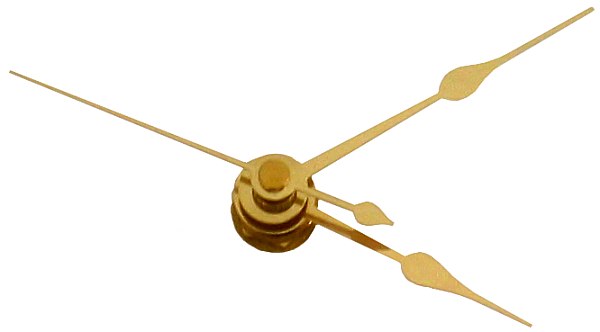
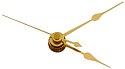
  • hands: The manufacturers of clock movements often offer various interchangeable hands for your clock. Brass seems to be the standard finish, but we also saw matte black and a chrome finish.

  • numbers: We chose to make a clock without numbers or marks, but this is an area where you can get real creative. Press-on adhesive backed numerals are available. You can also paint numbers, marks or attach objects to delineate the positions around the periphery of the clock. Check out this unique page for some ideas: sushi clock.


  • free plans © 2000-2008
    terms   privacy policy
     home    gallery
     projects    philosophy    faq